
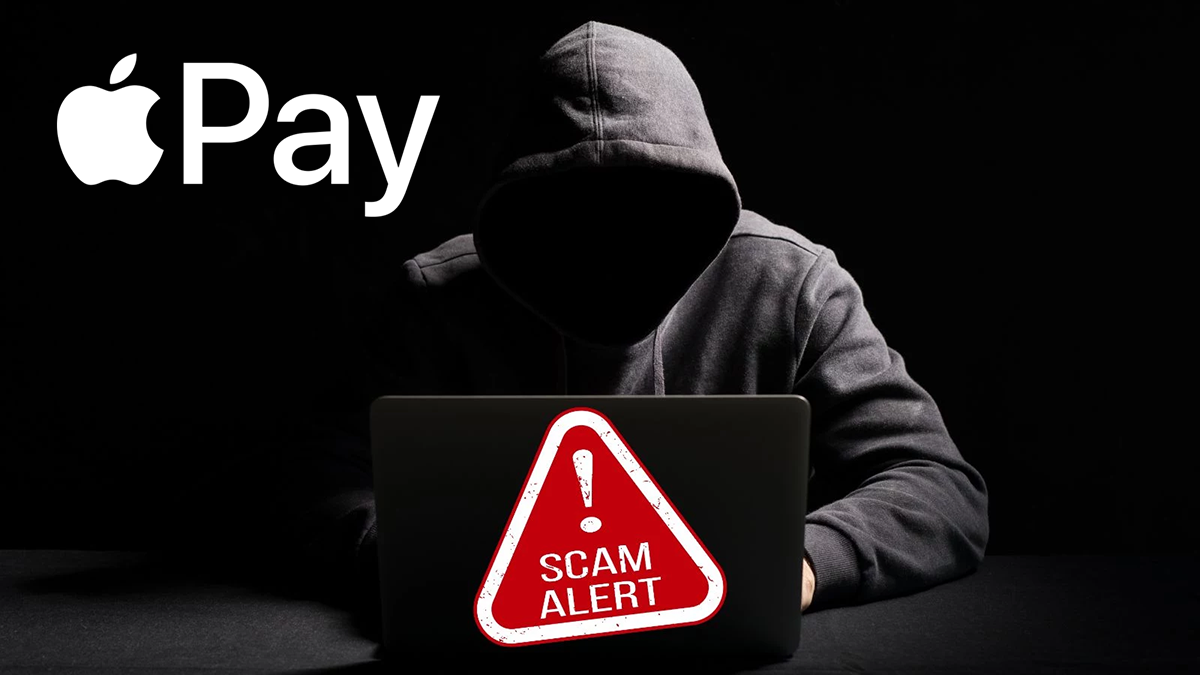
There’s a woman named Dorothy who got a text message warning her about a suspicious Apple Pay charge. She doesn’t even use Apple Pay. But she called the number anyway. Within minutes, she was on the phone with someone who knew her name, her address, and details about her finances. He said he was with the FBI. He said the FDIC was involved. He said she needed to withdraw $15,000 in cash to protect it.
She almost did.
A bank teller is the only reason that story doesn’t end worse. The teller spotted what was happening and stopped her. Dorothy was lucky. Most people aren’t that lucky — because they never get to the bank.
Here’s what the scam actually looks like
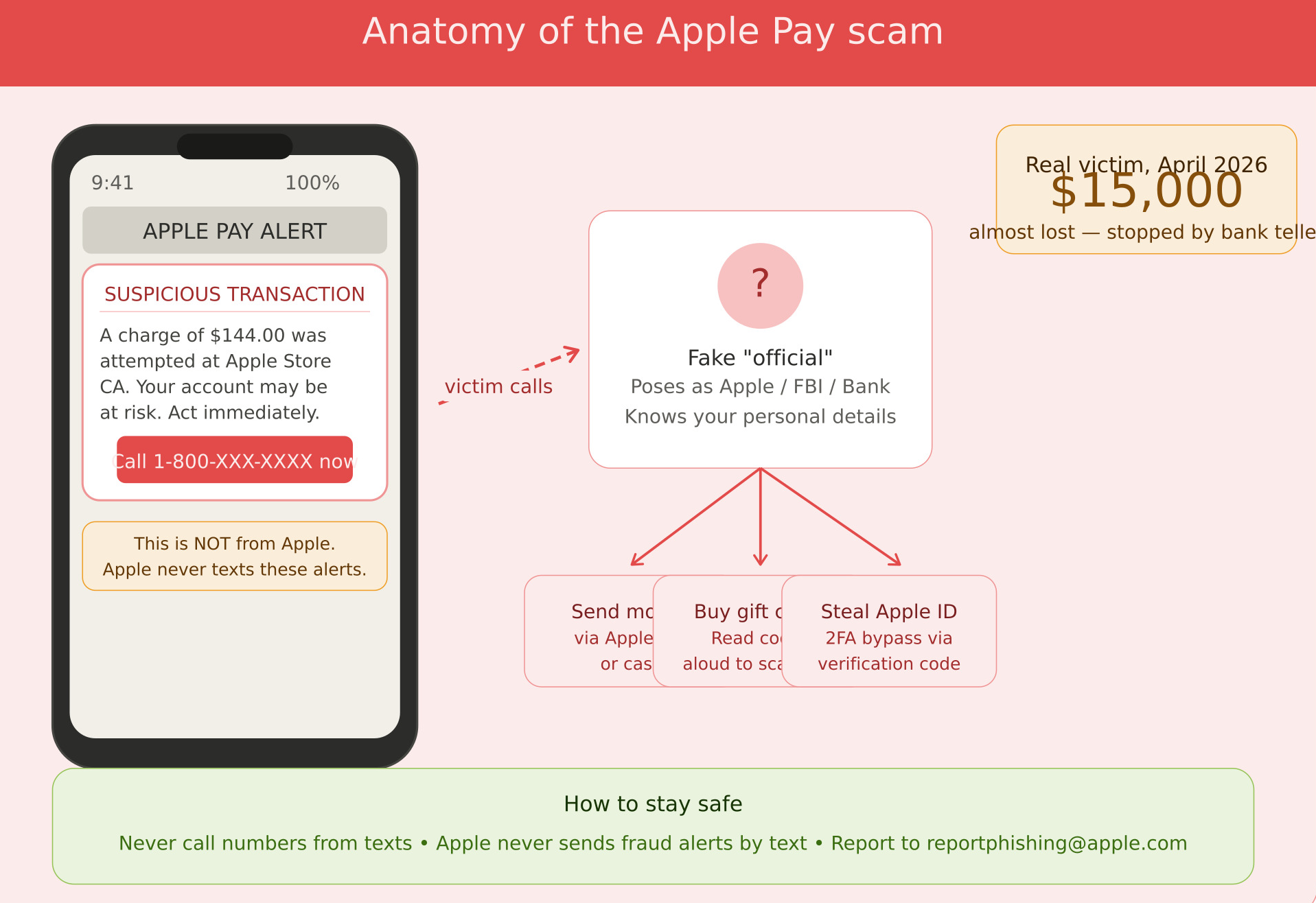
It starts with an email or text that looks completely normal: Apple logo, clean layout, a subject line designed to make your stomach drop. The message claims Apple blocked a suspicious charge on your account. There’s a case ID. A timestamp. A warning that your account is at risk. Sometimes there’s even a fake appointment booked on your behalf to “review fraudulent activity.”
Nothing looks amateur. That’s the point.
The message will claim a fraudulent purchase was attempted or declined using Apple Pay, that your account is frozen, or that it is under investigation. There will be language designed to crank up pressure — “take immediate action” — and a phone number to call.
If you call that number, you are not reaching Apple. You’re talking to a scammer who has been waiting for you.
The call starts with checks that sound routine: your name, the last four digits of your phone number, what Apple devices you own. Then comes a request for your Apple ID email. While you’re looking it up, a reallooking verification code arrives by text. The agent asks for this code, claiming it’s needed to confirm you’re the rightful account owner. In reality, the scammer is logging into your account in real time and using the code to bypass twofactor authentication.
It’s slick. And it works.
Why Apple Pay specifically?
Apple Pay is not broken. It’s still genuinely secure. But many people don’t fully understand how it works — including the fact that Apple doesn’t see your transactions at all. Transaction notifications in Apple Wallet are generated by the card issuer and merely relayed to your device by Apple.
That gap between what people think Apple controls and what it actually controls is exactly where these scammers live. They know people trust the brand. They use that trust by posing as Apple, your bank, or even federal agencies — leaning on fear, suggesting fraud, theft, or legal trouble — to get you moving before you can think clearly.
And once you authorize a payment yourself, recovering that money is very hard. This is not a hack. There’s no system breach to investigate. Unlike traditional hacking, these scams rely on social engineering — manipulating people rather than breaking into systems. The target does the transfer. The target buys the gift cards and reads out the codes. The target hands it over.
What they want from you.
There are a few variations, but the endgame is always the same. Sometimes they instruct victims to send funds via Apple Pay. Other times they tell people to buy Google Play gift cards and provide the codes, which wind up being sold on unscrupulous websites. In cases like Dorothy’s, they push for large cash withdrawals — harder to trace, impossible to reverse.
Scammers may also try to lower your guard by asking you to disable security features such as Stolen Device Protection or TwoFactor Authentication. Apple will never ask you to do that. That request alone should end the call immediately.
The things that should immediately make you suspicious.
Apple says it never sends texts about your Apple Pay activity and never asks for sensitive details by phone or text. If something feels off, check your Apple Pay directly on your device — and only contact support through official channels, not numbers from random messages.
The red flags are consistent across every version of this scam: an unexpected message about Apple Pay activity, a phone number in that message, pressure to act right now, someone asking for codes or passwords, instructions to move money or lie to your bank.
One key rule: Apple does not send unsolicited texts asking you to call support or provide sensitive information. Full stop.
If you receive one of these messages, take a screenshot and forward it to reportphishing@apple.com. If you think you’ve already been targeted, call your bank directly — through the number on the back of your card, not from any text — and report it to the FTC at reportfraud.ftc.gov
For Latest Tech Updates Please follow us :
facebook | twitter | instagram | telegram | whatsapp