

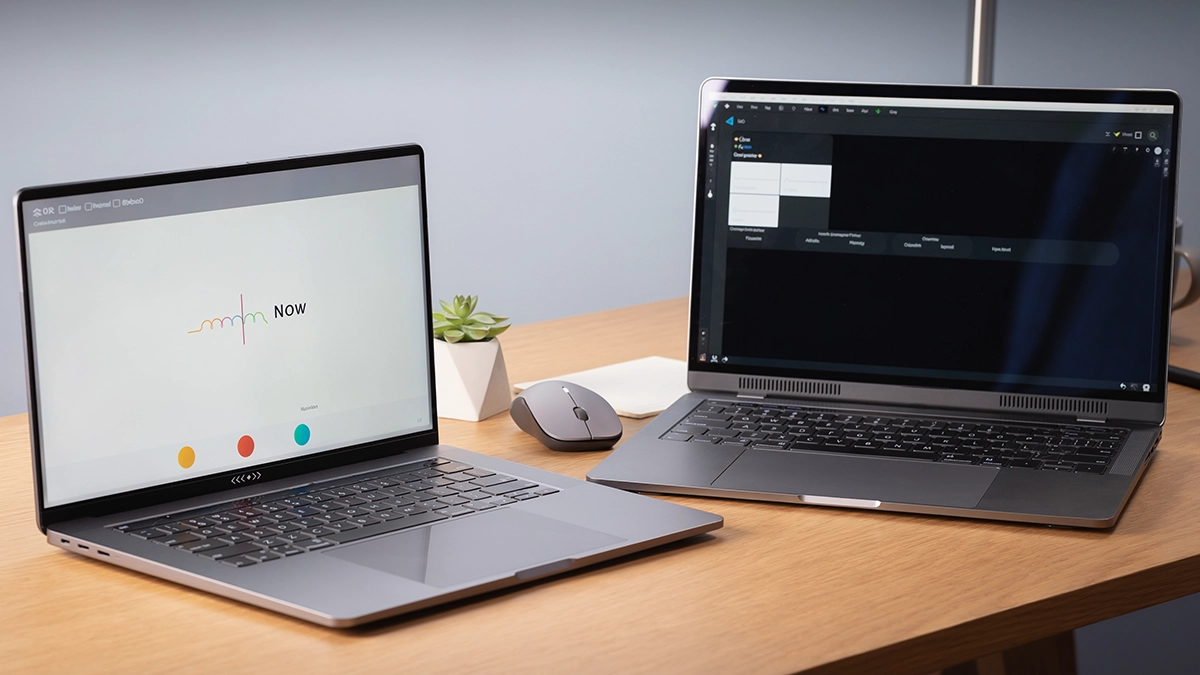
Apple is expected to launch the MacBook Neo — a stripped-down, sub-$800 MacBook built around the M4 chip — sometime in 2026. The pitch is simple: the performance of a MacBook, priced closer to a Chromebook. On paper, that sounds like bad news for Lenovo’s IdeaPad line, HP’s budget Pavilion, and every $599 Windows laptop currently cluttering Best Buy shelves.
But here’s where it gets complicated.
The real budget laptop buyer doesn’t buy Macs
Not because Macs aren’t good. They’re very good. But the person buying a $500 Windows laptop is often buying it because $500 is the number. It’s a college student whose parents set a budget. It’s a small business owner who needs something that runs QuickBooks and doesn’t require a learning curve. It’s someone who has spent twenty years in Windows and has no desire to relearn where the right-click lives.
A $799 MacBook Neo — even if it’s technically better than anything in that price range running Windows — still costs $799. That’s not a budget laptop. That’s a sale price on something aspirational.
Apple has pulled this move before. The iPhone SE was supposed to democratize iPhones. It sold fine. It didn’t kill Android’s low-end. People who want cheap want *cheap*, and Apple’s floor is still higher than most of the market’s ceiling.
Where the MacBook Neo could actually do damage
The more vulnerable target isn’t the $500 PC crowd. It’s the $900–$1,200 Windows mid-range — the Dell XPS 13, the Asus Zenbook 14, the Lenovo Yoga 7.
These laptops are good. Some are genuinely excellent. But they’re competing on specs in a way that becomes increasingly awkward when Apple ships a $799 machine that handles video editing on battery power without the fan kicking on. The M4 chip’s efficiency isn’t marketing. It’s a real, measurable gap that Windows OEMs haven’t closed.
If Apple prices the Neo at $799 and delivers battery life north of 15 hours with snappy everyday performance, that’s a harder sell against Lenovo’s $1,099 Yoga than it looks. Suddenly the question isn’t “Mac or PC?” — it’s “why am I paying $300 more for this?”
That’s where actual market pressure shows up.
The software problem hasn’t gone away
The thing Apple can’t fix with a cheaper price tag is software lock-in — and not in the way Apple fans usually mean it.
Plenty of enterprise software still runs Windows-only. IT departments don’t retool their stacks because Apple released a cheaper laptop. Gaming is still Windows-dominant. And while Apple Silicon runs a lot of things through Rosetta 2, “runs fine in most cases” isn’t a sentence that comforts someone who depends on a specific CAD tool or ERP system.
Budget PC buyers often have concrete software requirements. A nursing student needs Windows for clinical simulation software. A graphic designer at a small agency needs whatever the agency standardized on five years ago. The MacBook Neo doesn’t solve any of that — it just makes Apple’s pitch slightly cheaper.
What actually worries budget PC makers
The honest threat isn’t that the MacBook Neo steals existing budget-laptop customers. It’s that it raises the floor of what people expect.
When a $799 Apple laptop offers noticeably better build quality, battery life, and performance than a $699 Windows machine, it changes what “acceptable” looks like. Consumers start asking why the plastic lid flexes on the Lenovo. They notice the fan whirring. They wonder why the screen is dimmer.
That’s the slow pressure Apple applies. Not killing the category — just making it look bad.
Budget PC makers have historically responded to this with better specs at lower prices, which is a race they can usually win on paper. The problem is that Apple stopped competing on specs. A 12-core M4 chip number doesn’t mean much to someone who just wants the thing to open tabs fast and last all day.
The honest prediction
The MacBook Neo won’t kill budget PC laptops. The segment is too price-sensitive, too Windows-dependent, and too global for Apple to dent it meaningfully. In markets like India, Southeast Asia, and most of Latin America, the relevant price range is $300–$500, and Apple doesn’t play there at all.
What the MacBook Neo probably does is accelerate the slow erosion Apple has been running on the Windows mid-range for a few years. It makes the value proposition of a $900 Windows laptop harder to defend. It pulls some first-time laptop buyers — students, freelancers, switchers — who were on the fence.
That’s not dramatic. It’s also not nothing.
Budget PC makers should be less worried about losing customers tomorrow and more worried about what happens when “budget” starts feeling like a compromise in a way it didn’t before. That’s a slower problem to solve, and hardware specs alone won’t fix it.
For Latest Tech Updates Please follow us :
facebook | twitter | instagram | telegram | whatsapp