

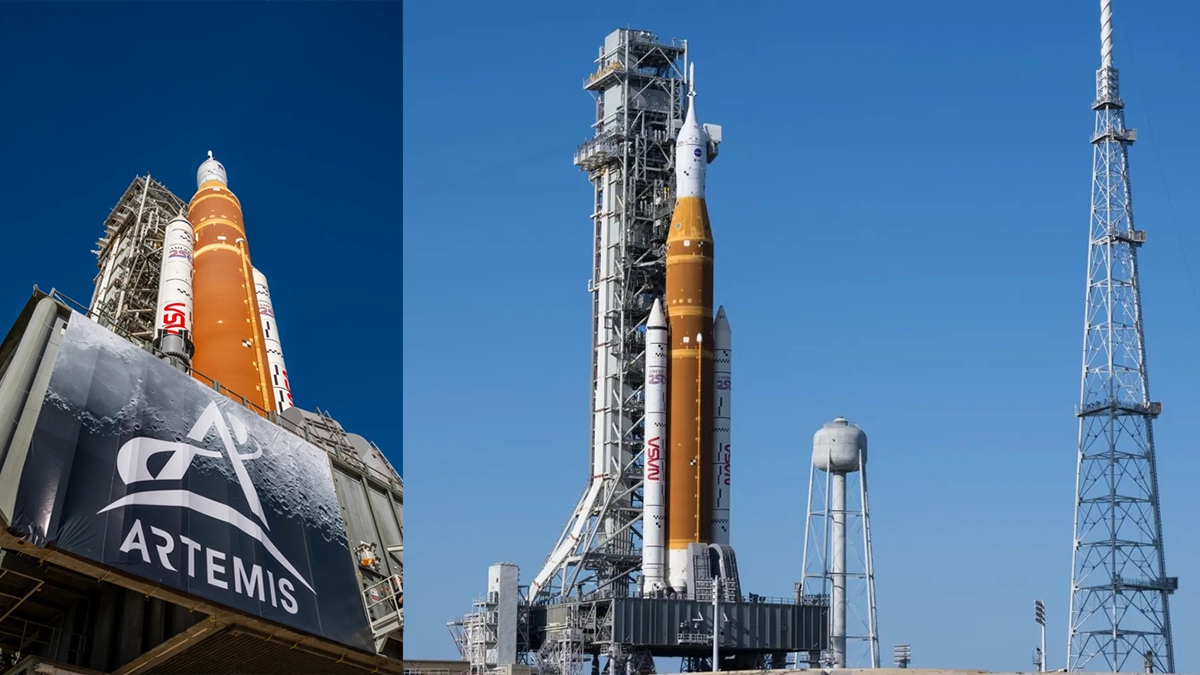
America hasn’t sent humans toward the Moon in 54 years. That ended Wednesday.
NASA‘s Artemis II rocket left Launch Complex 39B at Kennedy Space Center just after 6:24 p.m. EDT, carrying four astronauts on a free-return arc around the Moon and back. No landing — that’s Artemis IV, currently slated for 2028. This mission is about proving the hardware works with people inside it before anyone attempts anything harder.
The last time humans traveled this far from Earth, Nixon was president. The world has changed a lot since Apollo 17. The Moon hasn’t.
Why the U.S. needed this flight
The most critical thing Artemis II will test is Orion’s life support system — for the first time, with actual humans depending on it. No simulation covers that. If those systems underperform or fail, the Moon base plans, the Mars roadmap, all of it stalls. This is the precondition.
There’s also a geopolitical dimension, even if NASA’s official statements are careful to frame it purely as science. China has its own crewed lunar program. The U.S. returning people to cislunar space — and doing it before anyone else — carries weight beyond the aerospace community. The SLS rocket is currently the only vehicle that can send Orion, crew, and cargo to the Moon in a single launch.
NASA Administrator Jared Isaacman has spent his first months in the role reshaping the Artemis timeline: adding a new test mission for 2027, outlining plans for a permanent Moon base, monthly robotic landers, and lunar rovers. Whether that schedule survives budget reality is genuinely uncertain. But you can’t get to any of it without first proving the crew capsule works. That’s what today was.
The crew
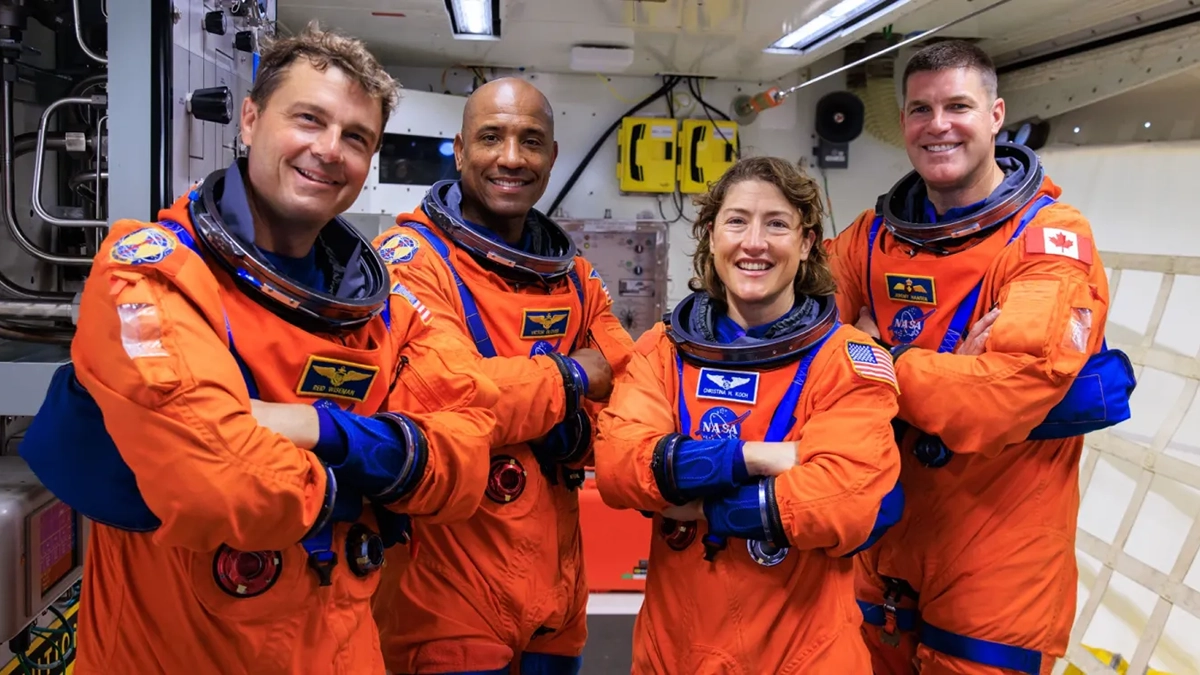
Reid Wiseman
Commander, NASA Leads the mission. Veteran of the ISS. At his age, will be the oldest person to leave low Earth orbit.
Victor Glover Pilot, NASA
First person of color to travel beyond low Earth orbit. Designed the mission patch so “A II” reads as the word “All.”
Christina Koch
Mission Specialist, NASA
First woman to travel beyond low Earth orbit. Holds the record for longest single spaceflight by a woman.
Jeremy Hansen
Mission Specialist, CSA
First non-American to travel to the Moon’s vicinity. Canadian Space Agency astronaut, selected in 2009.
Koch, for her part, has been clear-eyed about what she represents on this flight. She knows young women are watching. She’s carrying something beyond her own ambitions into that spacecraft, and she seems to understand that without making it the whole story.
Glover’s patch decision is worth sitting with. He and his crewmates designed “A II” to read as the word “All.” His explanation: he wanted this mission to be something that fills in the cracks between people rather than widening them. That’s a lot to ask of a patch. But it’s an unusually human thing for an astronaut to say at a press conference.
Hansen’s presence also reflects how Artemis actually works: as an international program, not just an American one. The Apollo era was funded and flown almost entirely by the U.S. government. Artemis depends on partners — Canada, Japan, Europe, Australia — for everything from lunar surface suits to gateway station modules. Having a Canadian astronaut on the first crewed mission past Earth orbit isn’t a symbolic gesture. It’s the deal.
What the next 10 days look like
The crew will spend roughly three days traveling to the Moon’s vicinity, one day in close lunar observation — including parts of the far side that no human has seen up close before — and then head back. Splashdown is expected around April 10–11.
If the mission goes cleanly, Artemis III follows. That one lands on the Moon. No pressure.
Watch Live
For Latest Tech Updates Please follow us :
facebook | twitter | instagram | telegram | whatsapp