
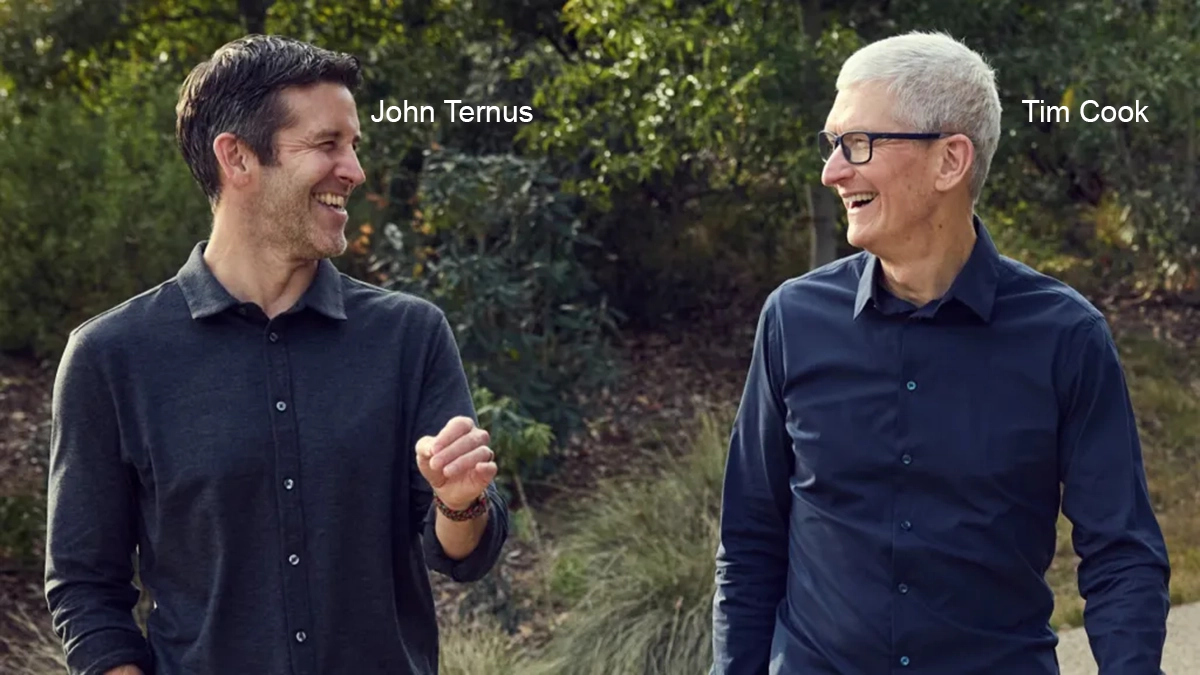
Tim Cook is done being Apple’s CEO as of today. After leading the company for a little over fifteen years, he hands the job to John Ternus, Apple’s senior vice president of hardware engineering, who officially takes over on September 1.
The move isn’t a surprise. Apple announced the succession back in April, when Cook posted a letter to the company saying he’d be leaving the CEO role behind in September and moving into the newly created position of executive chairman. The board approved the transition unanimously, describing it as the outcome of a long, deliberate succession planning process rather than anything sudden.
Cook’s own explanation for the timing was simple. He told Apple staff in a company meeting that the business was doing great, the product roadmap looked strong, and Ternus was ready. “Now was the time,” he said.
It’s worth remembering how Cook got here in the first place. He joined Apple in 1998, years before most people had ever thought about buying a computer with a fruit logo on it, and spent his early years overhauling the company’s supply chain and manufacturing operations. He became executive vice president of worldwide sales in 2002, then chief operating officer in 2005. When Steve Jobs stepped down in August 2011 because of failing health, Cook took over the top job. Jobs died two months later, leaving Cook to run Apple without its co-founder for the first time.
What followed wasn’t a repeat of the Jobs playbook, and it was never going to be. Cook’s Apple was about scale, operations, and steady expansion rather than dramatic reinvention. Under him, the company launched the Apple Watch, AirPods, and more recently the MacBook Neo, and pushed its Services business past $100 billion in revenue, now Apple’s second-largest segment behind the iPhone. In 2020, Cook greenlit the move away from Intel chips toward Apple’s own silicon, a transition that wrapped across the entire Mac lineup by 2023. By most financial measures, it worked. Apple crossed the $4 trillion mark in market value during his tenure.
Cook isn’t disappearing from the company. Starting September 1, he becomes executive chairman, and according to Bloomberg’s Mark Gurman, he’s told Ternus he’ll keep handling Apple’s relationships with the Trump administration and the Chinese government, along with broader policymaker engagement around the world. Arthur Levinson, who has chaired Apple’s board in a non-executive capacity for fifteen years, moves into the role of lead independent director that same day, and Ternus joins the board.
Ternus, 51, has spent nearly his entire career at Apple and has been closely tied to its recent hardware launches. He’s stepping into the CEO seat at an awkward moment for the company. Apple has been playing catch-up on AI against Microsoft and Google, and its promised overhaul of Siri has been delayed. Whatever else defines his tenure, that’s the problem sitting on his desk on day one.
For Latest Tech Updates Please follow us :
facebook | twitter | instagram | telegram | whatsapp